
For the last 150 years Christmas cards have been adorned with nativity scenes or holly, ivy and mistletoe, a rotund Father Christmas, hosiery, trees, and to the shout of Noel, Noel. Sacred and profane, plant symbolism and carols that echo the sacred magic of the nativity scene, the lowing animals popularized by St Francis of Assisi, the shepherds and kings, all playing their part and foretelling the future. There are also fashion plates, New Year wishes and cartoons. So what on earth do Christmas cards portray – tasty, tasteful or tasteless?
Caroline has lectured in the UK, Australia, New Zealand, USA, Europe and Japan. She is academic tutor and course director at Cambridge Institute of Continuing Education. She also lectures for the Royal Horticultural Society, museums, specialist travel companies and The Gardens Trust. She is the author of 12 books including Water Lilies and Bory Latour-Marliac, the genius behind Monet’s water lilies; Impressionists in their Gardens; Follies of Europe: Architectural Extravaganzas; Monet at Giverny and Icons of Garden Design.

Years of working as an artist within the Criminal Justice System in England and Germany have given Angela unique insights into the destructive and costly cycle of crime, prisons and re-offending. In this thought-provoking talk she offers a deeper understanding of the minds, lives and challenges of offenders. With extraordinary slides of art projects and prisoner’s art, she demonstrates how within the process of creating art of any discipline, there are vital opportunities for offenders to confront their crimes and develop the key life skills so essential in leading a positive and productive life. A frequent response to this talk has been “I had no idea!” and indeed it casts light onto areas of our society where the Arts not only are visual, decorative or commercial, but absolutely vital, hugely relevant and potentially life-changing.
This talk is moving, informative and very original. Interspersed with personal accounts of humorous or slightly horrifying situations, these talks have kept audiences across the country engrossed.
Angela Findlay is a professional artist, writer and freelance lecturer with a long career of teaching art in prisons in Germany and England. Her time ‘behind bars’ and later as Arts Coordinator of the London-based Koestler Arts, gave her many insights into the huge impact the arts can have in terms of rehabilitation. In 2016 she was invited by the Ministry of Justice to support the case for the arts to be included in new, progressive programmes of rehabilitation and education.
Angela has a BA(Hons) in Fine Art, a Diploma in Artistic Therapy (specialising in colour) and her paintings are widely exhibited both nationally and internationally. Her book - In My Grandfather’s Shadow - expanding on the above subjects was published by Penguin Transworld in July 2022.

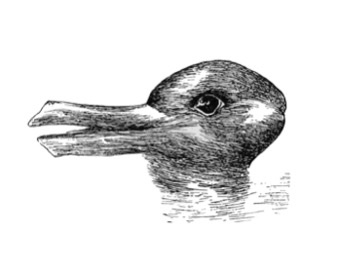
In this thought provoking and entertaining presentation John has selected a range of visual illusions illustrating ‘illusions in art’ as well as ‘illusions as art’. Some of the images will amuse, some will confound and others will challenge your self-belief. Even those familiar with illusions may not have appreciated how they affect our appreciation of art or how much they influence our day-to-day lives.
John Ericson was formerly a lecturer at the University of Bath where he was Director of Studies in the School of Education with responsibility for the professional development of teachers. He has worked extensively overseas as an educational consultant and this has given him the opportunity to give lectures and presentations at conferences all over the world.
As well as the talks he has developed from his professional background, he offers presentations on an eclectic range of topics that are derived from his diverse interests and enthusiasms such as, Pub Signs, Children’s Book Illustrations and the Shakers of North America. All his talks are entertaining, highly informative, very well illustrated and presented with warmth and humour.
The Frick Collection, New York, is one of the finest-quality museums in the world. American industrialist and steel magnate, Henry Clay Frick (1849-1919) acquired some of the most superb works of art available in the ‘Gilded Age’. He died on the eve of WWI after being able to collect some of the best pieces available in Europe and America. His agents were really effective and the result is a first rate collection of fine French furniture, enamels, porcelain, paintings by Bellini, Van Eyck, Holbein, Titian, Rembrandt, Vermeer, Van Dyck, Rubens, El Greco, Velázquez, Fragonard, Ingres, Renoir, JMW Turner, Constable, Whistler and many others. These are all set within an outstanding mansion in Manhattan. The collection opened to the public in 1935.
Hilary Williams trained in Art History at the University of East Anglia and as a postgraduate at the Courtauld Institute of Art, London University. She was formerly Print Room Superintendent at the British Museum. She is now Art History Education Officer, working on Adult Learning Programmes at the Museum. She has published on Rembrandt, has lectured widely in the UK, Europe and USA and has led Special Interest Tours of the State Apartments at Buckingham Palace. Hilary is also a Guide Lecturer at the Wallace Collection London.

Discover the amazing power and variety of the sculpture of Donatello, one of the most important artists of the early Renaissance. Donatello may have been born, in Florence, over 600 years ago, but his sculpture is so powerful that it still speaks directly to us today. Working alongside masters such as Brunelleschi, Ghiberti and Masaccio, he was one of the pioneers of the Renaissance and helped to change the way people looked at the world. From delicate idealism and startling realism, to the astonishing emotional force of his later works, this survey looks at the huge range of his sculpture, setting it against the vivid and colourful world of Italian politics in the age of the Renaissance.
Jo Walton has combined teaching and lecturing with a career in art bookselling and has been a volunteer guide at both Tate Britain and Tate Modern. Now a freelance lecturer for The Arts Society, the Art Fund, and Friends of Dulwich Picture Gallery and local art societies.

The source of the stuff of dreams, the poppy is a beautiful, fragile flower with immense power. Opium (from the greek ‘opion’ – poppy juice) is a hypnotic bringer of sleep, delightful lethargy and relief from pain. It is also highly addictive.
Greed led to the introduction of this hugely desirable substance first to China, and then to Europe. The beguiling seduction of its effects led to its use to quieten troubled minds and calm agitated children and babies. Its use – often by those with troubled minds – led to the creation of great works of art in music, art and literature. Social and art history meet as this lecture unfolds.
Amanda Herries read Archaeology & Anthropology at Cambridge. 1978-1988 Curator at Museum of London specialising in the decorative arts 1718 to present day, organising exhibitions, lectures, booklets and broadcasts. 1988-1995 She moved with her family to Japan, lecturing and writing on Oriental / Western cross-cultural and artistic influences. In 1995 she returned to the UK, fundraising for arts companies, writing, lecturing and guiding tours to Japan. Most recent publications are on Japanese plant and garden influences in the West.

From the early sixties, when he left the Royal College of Art more famous than his teachers, Hockney's paintings have shown a charm and humour that sets them apart from others of his generation. A naturally gifted draftsman, his love of ingenious visual devices has led him to experiment with a whole range of techniques, from stage design to coloured paper making. From the early abstract expressionist images, through his famous Californian scenes of swimming pools to the photo-montages of the mid eighties, this lecture follows the career of an artist whose wit and imagination has never faltered.
About our speaker
Douglas Skeggs read Fine Art at Magdalene College Cambridge and has been a lecturer on paintings since 1980. In that time he has given over 4000 lectures to universities, colleges and art societies. He was the director of 'The New Academy of Art Studies' for three years and is presently a regular lecturer at 'The Study Centre', 'Christie's' course 'The History of Art Studies' and other London courses. Among his more improbable venues for lectures are the bar on the QE2, MI5 headquarters, the Captain's Room at Lloyds, and an aircraft hanger in a German NATO base. Overseas he has lectured in Belgium, France, Germany and Spain, and has taken numerous tours around Europe. He helped set up the Abercrombie & Kent “Private Label tours” and is presently cultural adviser to Ultimate travel
He has written and presented various TV documentaries, notably the Omnibus programme on 'Whistler' and the exhibition video on 'William Morris.' Three one-man exhibitions of his paintings have been held in England and Switzerland. He has published five novels, which have been translated into 8 foreign languages, and his book on Monet, 'River of Light', has sold 30,000 copies in England, America and France.

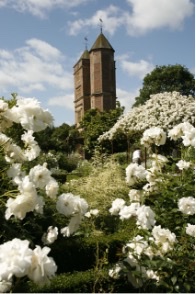
The Arts and Crafts gardens created, in particular by Sir Edwin Lutyens and Gertrude Jekyll, set a standard against which English gardens would be measured for the next 60 years. Sissinghurst, created and gardened by Vita Sackville-West, novelist, poet and garden writer, and her husband, Harold Nicholson, from 1930 to her death in 1962, is the perfect example of this style; wonderful plantsmanship set within a framework of hedges and vistas.
Sissinghurst is the child of Knole, the sprawling Elizabethan house that Vita did not inherit, described by her as having “an inward gaiety of an aging woman who has had many lovers and seen many generations come and go.” The Nicholsons acquired a ruin and, to their intense surprised, created, along with Lawrence Johnston’s Hidcote, the quintessential twentieth century English garden.
This lecture looks at the life of Vita Sackville-West and the extraordinary garden that she created which nearly 60 years after her death continues to charm and delight.
Our speaker, James Bolton, set up a garden design business in 1992, following two years as head gardener at the Old Rectory, Farnborough. He had previously trained with the Direction des Parcs et Jardins in Paris.
James Bolton lectures extensively on garden history to the Arts Society and elsewhere. He was Faculty Director of Design History at the Inchbald School of Design. He now runs Border Lines, the leading tour company to the finest private gardens in Britain, Europe and South Africa.
Impressionist Berthe Morisot is known for her light-filled canvases of modern life: afternoons boating on a lake, young women in ballgowns and children playing. Yet her contemporaries perceived a connection with the eighteenth century with Renoir considering her ‘the last elegant and 'feminine’ artist that we have had since Fragonard.’ The art critic Paul Girard, surveying the 1896 retrospective of her work in Paris, declared, ‘it is the eighteenth century modernised'.
Eighteenth century art fell from favour following the French Revolution but was ‘rediscovered’ in the mid-nineteenth century by collectors including Louis La Caze and Hippolyte Walferdin. Morisot copied works by Boucher, she experimented with red chalk, a technique closely associated with Rococo drawings and she also greatly admired the English painters Gainsborough, Reynolds and Romney, whose work she first encountered on honeymoon in the Isle of Wight and London in 1875.
This lecture traces her engagement with eighteenth-century art and culture, and it highlights what distinguishes her work from that of her predecessors .

This lecture on the Poster relates the technical innovation combined with the creative genius and remarkable craftsmanship that enabled the Poster to become the world’s first effective method of mass communication. From ‘Les Chats’ by Edouard Manet to ‘Saxoleine’ by Jules Cheret, and ‘Moulin Rouge’ and ‘Divan Japonais’ by Toulouse-Lautrec, you will see inspirational work by generations of superb artists who made the poster great, including the magnificent Mucha and the socially-conscious Steinlen. Learn how an effective poster is designed, how it plays on the mind and why most posters today go unnoticed.
About Charles Harris
In his role as creative director of international advertising agencies, he has created posters for major brands including British Airways, Nestlé, Sony, General Motors and Shell. He focuses on the role of posters and poster artists in his lectures as well as lecturing on design, illustration and photographic styles. His travel writing and photography has appeared in publications such as Time magazine. He has also produced TV and radio commercials and corporate video programmes.
